
Columbia County Arrest Records
Arrest records begin on the law-enforcement side. They may identify the person arrested, the arresting agency, booking or custody facts, the incident or complaint number, and the initial reason the person was taken into custody. Court charge records begin when accusations enter the court process. In Columbia County, formal criminal case activity can appear in Magisterial District Court or Court of Common Pleas docket records, while sheriff and jail information may answer different questions about custody, warrants, or public-safety posts.
The distinction is practical. The arrest or booking side can point to Inmate Records for custody status or jail contact routes. The charge side shows what a prosecutor files and how each accusation changes as the case moves. For the full case file, including pleas, motions, disposition, and sentence, use Criminal Court Records. For all record types, use Court Records.
The Columbia County Sheriff's Office CRIMEWATCH page gives public access to sheriff news, warrants, arrests, tips, and related tools.
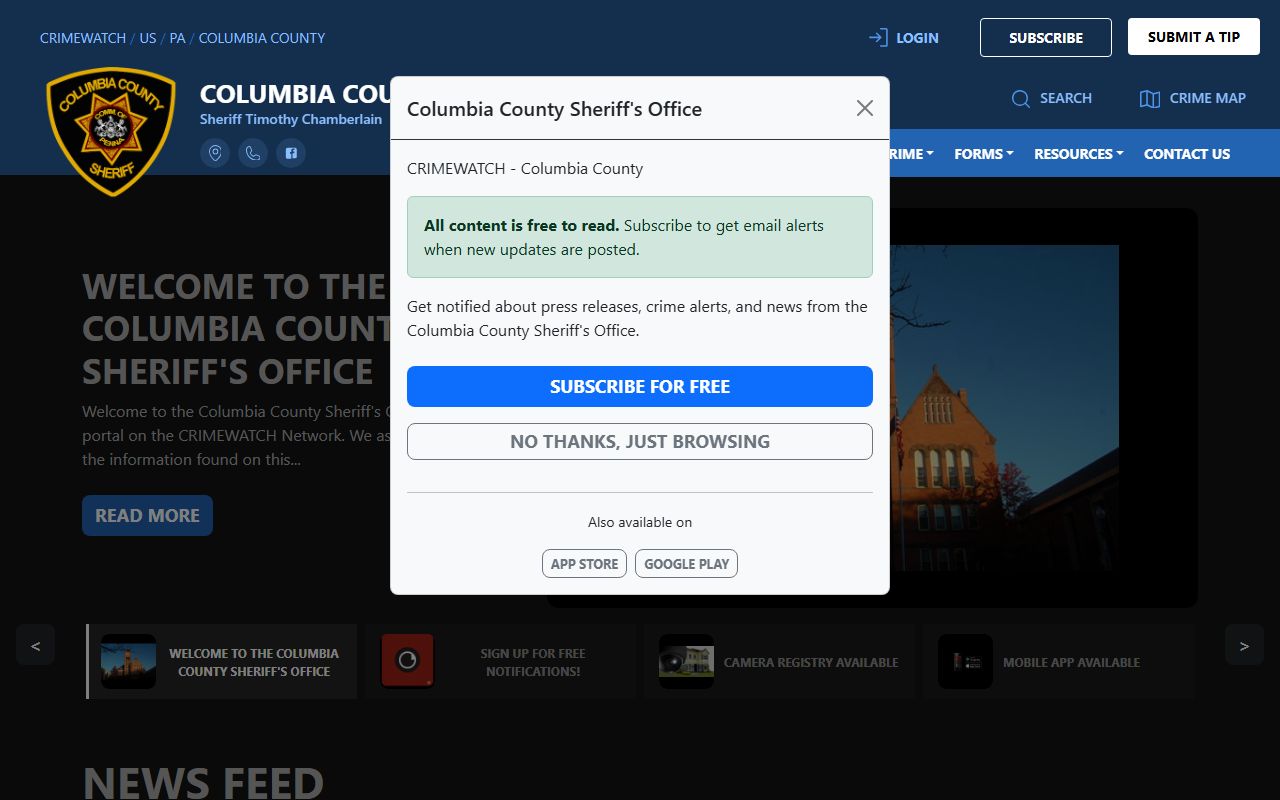
CRIMEWATCH is useful for sheriff-posted arrest and warrant context, while the court docket remains the better source for filed charges and case outcomes.
Find Arrest Records and Charges
Start with the question being asked. If the question is whether someone is currently in local custody, the county prison and inmate-record channels are more direct. If the question is whether the court has filed charges, use Pennsylvania UJS Case Search for Court of Common Pleas and Magisterial District Court docket sheets. If the question is whether a warrant is posted, use sheriff CRIMEWATCH warrant records and confirm with the issuing office.
- Search UJS by docket number, defendant name, OTN, police incident number, complaint number, or SID.
- Choose Magisterial District Court for preliminary criminal, summary, traffic, and lower-level criminal records.
- Choose Court of Common Pleas when the case has moved to major criminal proceedings.
- Open the docket and read each charge line, statute reference, severity, and current status.
- Contact the Clerk of Courts or the proper MDJ office for copies, missing entries, or complex requests.
For Columbia County arrest records tied to warrants, the Sheriff's Office lists active warrant posts through CRIMEWATCH and accepts tips through its forms. For a court case, do not rely on a sheriff post alone. Check the court docket for charge filing, amendment, dismissal, plea, conviction, sentencing, and financial obligations.
Charges After Arrest
After an arrest, the court charge record is built from formal charging documents and docket events. Pennsylvania criminal cases can involve an initial complaint at the Magisterial District Court level and a later criminal information in Common Pleas after preliminary proceedings. The research did not identify Columbia County grand-jury indictment detail for routine local cases, so indictment should be understood as a less common charging form rather than the normal route for most county cases. The Columbia County District Attorney page is the local prosecutor source tied to these filings.
| Complaint | Information | Indictment | |
|---|---|---|---|
| Filed By | Police or prosecution process at the lower-court stage. | District Attorney in Common Pleas criminal practice. | Grand jury process where legally used. |
| Common Use | Initial criminal accusation and preliminary proceedings. | Formal Common Pleas charging document after a case moves forward. | Serious or specialized prosecutions, not shown as routine in local research. |
| Record Value | Shows the starting accusation. | Shows the charges prosecuted in the trial court. | Shows grand-jury based accusations if filed. |
The Columbia County District Attorney prosecutes crimes occurring in the county and the court site links local ARD, guilty plea, post-sentencing, CRN, and full-assessment materials. Those forms can affect how court charges after arrest move from accusation to disposition.
Columbia County Charge Status
Charges can change. A docket may show an initial charge, then later show an amended, reduced, withdrawn, dismissed, or conviction result. A person reading Columbia County court charge records should follow each count from filing through disposition. Do not assume all listed accusations ended the same way. One arrest can produce several separate charges, and one case can end with mixed results.
| Status | What It Means |
|---|---|
| Pending | The charge is still open or has not yet reached final disposition on the docket. |
| Amended / Reduced | The charge was changed, often by legal filing, plea terms, or court action. |
| Dismissed / Withdrawn | The charge did not proceed to conviction in that form. |
| Nolle Prosequi | The prosecution chose not to proceed on that charge, subject to court practice. |
| Guilty / Convicted | The charge ended in a guilt-based result by plea or verdict. |
Charges vs. Convictions
Being charged is not the same as being convicted. Columbia County arrest records can show why law enforcement acted, and court charge records can show what was formally alleged. A conviction requires a later legal outcome. The same docket may list charges that ended in conviction next to charges that were dismissed, reduced, or otherwise resolved. Read the disposition line before drawing conclusions.
| Charge | Conviction | |
|---|---|---|
| Meaning | A formal accusation filed in court. | A guilt-based outcome entered by plea or verdict. |
| When It Appears | Early in the arrest-to-court process. | After disposition and often before or at sentencing. |
| How to Read It | Check current status and later amendments. | Check sentence, probation, restitution, fines, and costs. |
Note: A charge line alone does not prove a conviction or sentence.
Sealed vs. Expunged Records
Pennsylvania court records can be public, limited, sealed, or expunged depending on the record type and legal history. Juvenile matters, sealed cases, expunged records, limited-access criminal records, and confidential identifiers may not appear in public search results. Columbia County users seeking relief from public access usually need the docket, the Pennsylvania State Police record, and a careful review of eligibility.
| Sealed or Limited Access | Expunged | |
|---|---|---|
| Public Search | Hidden or narrowed for public users. | Removed from public criminal record access if granted. |
| Who May See It | Courts, law enforcement, or authorized users may retain access. | Access is much more limited after expungement. |
| Common Starting Point | Clean Slate or a court order where eligible. | Eligible dismissal, acquittal, summary conviction, pardon, ARD, or petition path. |
Charge Codes and Levels
Charge records may include statute text, charge descriptions, severity labels, OTN, docket number, court level, and status. The UJS and PAeDocket tools can support searches by participant name, organization, docket number, OTN, police incident or complaint number, and SID. Those fields help connect the arrest event to the formal charge record. A charge code or statute citation should be read with the charge status, not in isolation.
For warrant-linked charges, the Sheriff's CRIMEWATCH warrant posts may show offense or charge labels, warrant type, active status, docket number, issuing authority, date issued, location, tip instructions, and agency contact details. One sample warrant record in the research showed a domestic-relations warrant with docket numbers. Another showed a bench warrant tied to fleeing or attempting to elude police and included a presumed-innocent notice.
The Sheriff's CRIMEWATCH forms page provides a submit-tip channel for public information.
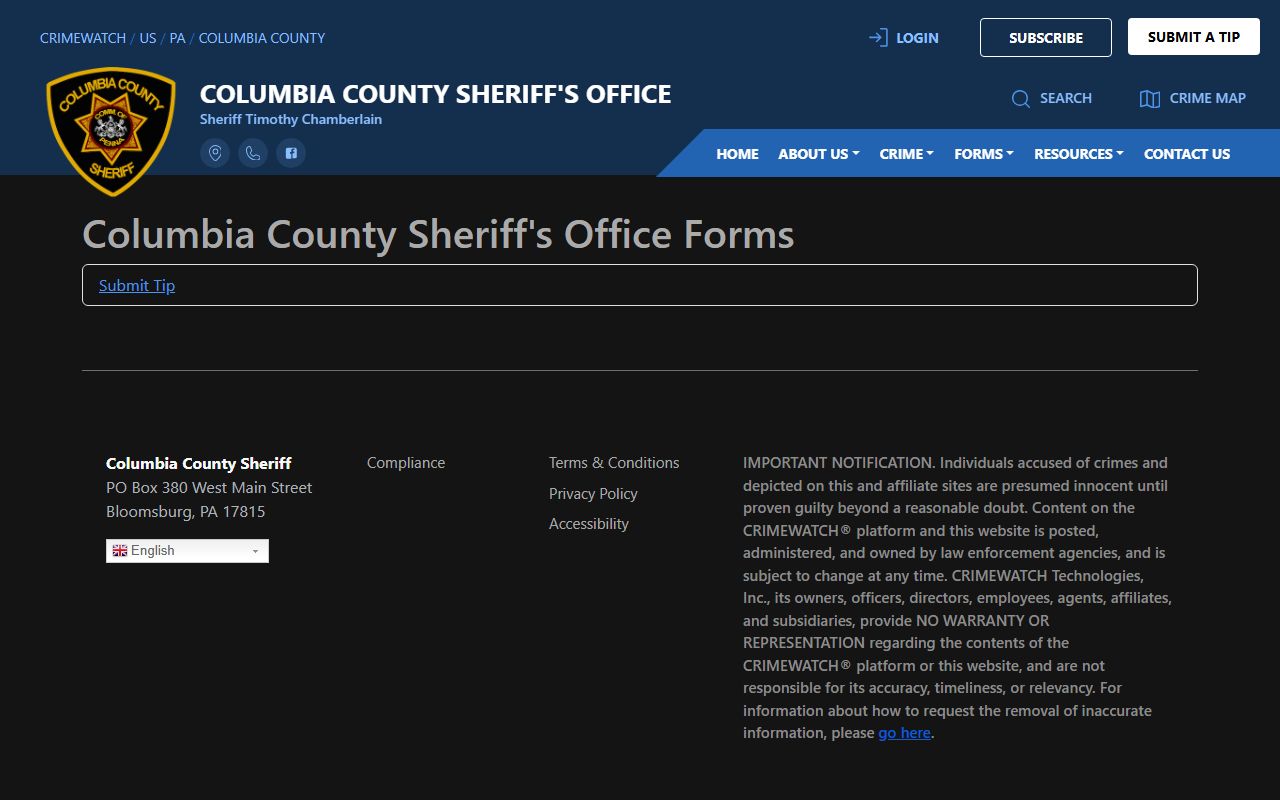
Tip forms can support law-enforcement follow-up, but they do not replace a court docket search for charge status or disposition.
Statewide Criminal History
Columbia County court charge records are not the same as a statewide criminal-history background check. The Pennsylvania judiciary warns that web docket sheets should not be used in place of a criminal-history background check from Pennsylvania State Police. Court dockets can show accusations, hearings, pleas, dispositions, and sentences. A state criminal-history record is a separate law-enforcement record governed by criminal-history rules.
For public court access, 204 Pa. Code § 213.81 governs Pennsylvania case-record access through court custodians. The Pennsylvania Right-to-Know Law applies to many executive and local agency records, but court case records are handled primarily by judiciary access policy and the court custodian, not a general agency-record request path.
Background Check Considerations
Arrest records, charge records, and convictions can carry different meanings. Dockets may lag, charges may be amended, and public access may hide records that are sealed, expunged, juvenile, or limited-access. Employers, tenant screeners, insurers, and other regulated users need compliant background-check procedures rather than casual searches through court and sheriff pages.
Important: Public arrest and charge lookups are not FCRA consumer reports and should be verified with official custodians.
The Columbia County Sheriff mobile app listing says residents can report crimes, submit tips, use interactive features, and receive public-safety news.
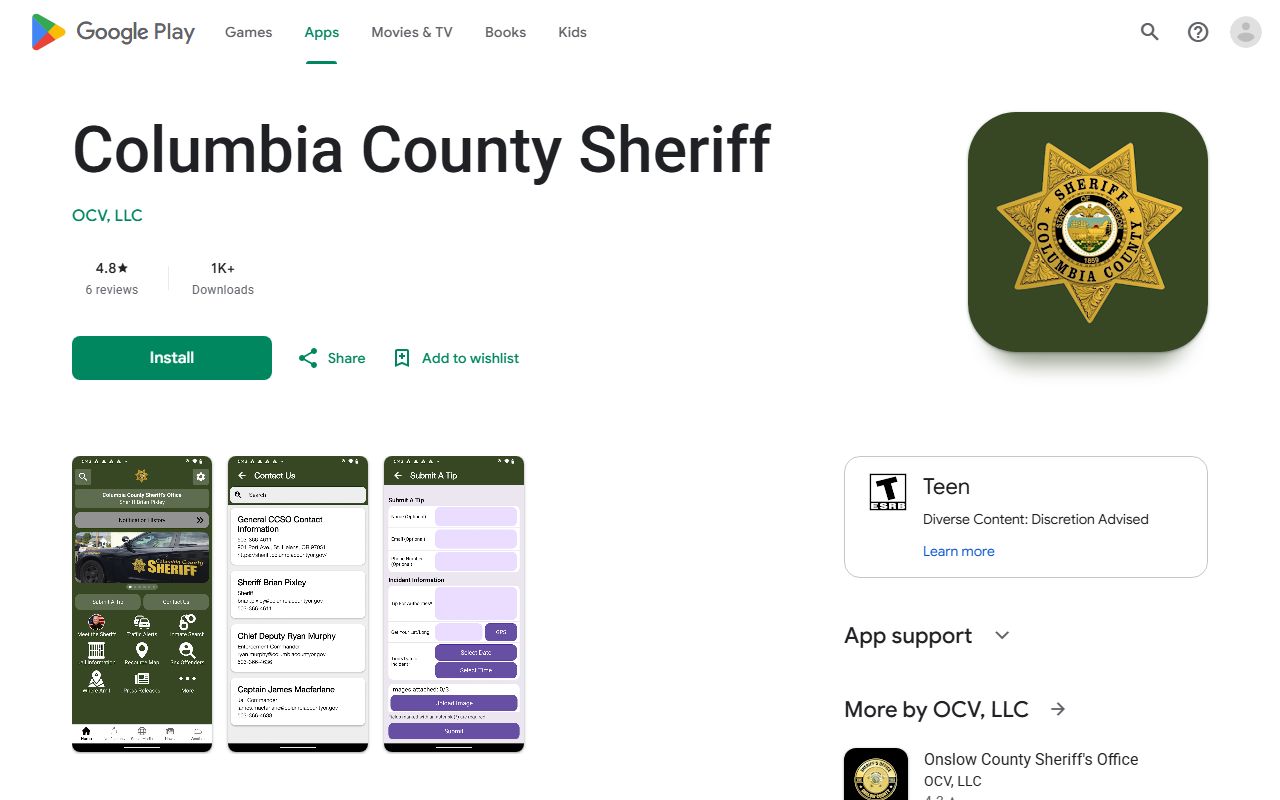
The app can help with sheriff communication and public-safety updates, but emergency reporting should still go to 911 as the listing states.
Restricted Columbia County Charges
Restricted charge records can include juvenile charges, sealed records, expunged records, limited-access criminal matters, confidential information forms, confidential document forms, Social Security numbers, financial account numbers, driver's license numbers, SID numbers, and protected minor or victim information. Public remote access may show only a limited docket, even where the courthouse holds more case material.
When a Columbia County arrest record or court charge record is missing from a public search, possible reasons include delay, wrong court level, sealed status, expungement, limited access, juvenile treatment, or a search key mismatch. The best next step is to use the docket number if known, check both Common Pleas and MDJ levels, and contact the Clerk of Courts or the issuing MDJ office for records that require custodian review.